

Why Germany Lost the War
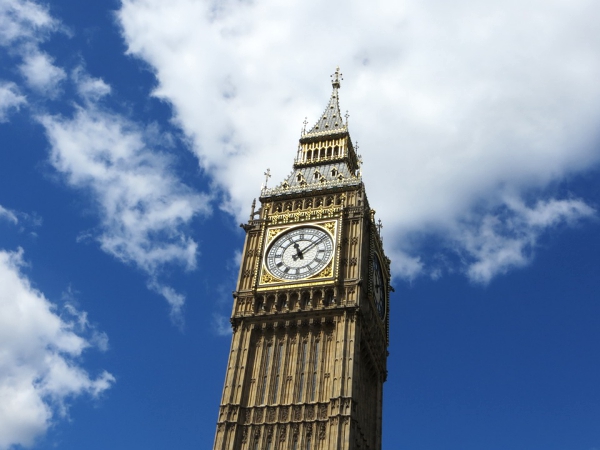
While being interrogated by the British after the war, one Nazi official gave his opinion of why Germany had lost. He said, “During the war, you had a secret weapon for which we could find no counter-measure, and which we did not understand, but it was very powerful. It was associated with the striking of Big Ben at 9:00 p.m. each evening. I believe you called it the ‘Silent Minute’.”[1]
The Idea
The idea for this mysterious weapon had begun to take form more than twenty years earlier, when Wellesley Tudor Pole was a major in the British army during the First World War. He started thinking about taking one minute of silence each day to honor the men who had died in battle.
But when the Second World War came along, and the UK’s future was looking uncertain at best, Major Pole thought the one minute per day might be better used to bring about peace. He began campaigning for a national daily minute of silence when everyone would unite their thoughts and prayers for peace. It could be one minute of praying for peace, of meditation for peace, or just a wish for peace, according to each person’s beliefs.
It Can’t Hurt
At first, no one really paid any attention to the Major’s unusual idea. But then the Blitz started. From September 7, 1940, London was bombed nightly and it would continue for 57 consecutive nights. The Major’s plan surely couldn’t make things any worse. So King George VI and Winston Churchill got on board.
On November 10, 1940 at 9:00, all of Briton was gathered around their radios to find out how the war was going. The announcer explained that Big Ben chiming out 9:00 would be broadcast before the news from then on. The people of Briton were asked to take that one minute during the chiming to pray for, or visualize, peace. As everyone knew they were in for another night of bombing, there probably weren’t many who didn’t participate.
The British weren’t the only ones practicing this Minute of Silence: The Commonwealth countries participated, and it was even recognized in the US by President Franklin D. Roosevelt. The BBC estimated that those participating in the Silent Minute ran into the millions.

Did it Help?
We can’t say whether the Silent Minute was a factor in winning the war, as the German officer believed, or whether it helped the British hold on to their determination because these are things that can’t be measured. But we do know that the British kept their determination in the face of seemingly insurmountable odds, and that they did eventually win the war (with a bit of help, of course).
After World War II, the Silent Minute faded from public thought. In 1947, the Big Ben Silent Minute became a Sunday evening only broadcast. Then in the 1960s, the evening news was moved from 9:00 to 10:00, and the Silent Minute broadcast ceased altogether.
A Revival
It almost faded from public memory until 1994. That’s when Dorothy Forster revived the movement and registered the Big Ben Silent Minute Charity in the UK. The organization asks participants to observe one minute of silence at 9:00 pm local time so there will constantly be peaceful intentions going up around the clock. Those who participate pray, meditate, or seek peace in their own way for all the regions of the world where there are wars and conflicts. And unfortunately, there are still many of them.
[1] The Sydney Morning Herald, May 12, 1951
*The Silent Minute website: www.thesilentminute.org.uk
What do you think about this? Let me know in the comments section below. And if you want to read more of my curious histories, subscribe to my blog (at the top or bottom of this page).


Click for Big Ben in his own words– an excerpt from a story I contributed to The Wisdom of Monuments book.

- Ten Wow-Worthy Women Who Changed History – 5 March 2026
- Rats and Weevils Have Their Day in Court: Strange Medieval Animal Trials – 13 February 2026
- The Great Paris Mustache Strike of 1907: A Close Shave with History – 1 February 2026



COMMENT HERE: Can't wait to hear what you think… (email not required)