
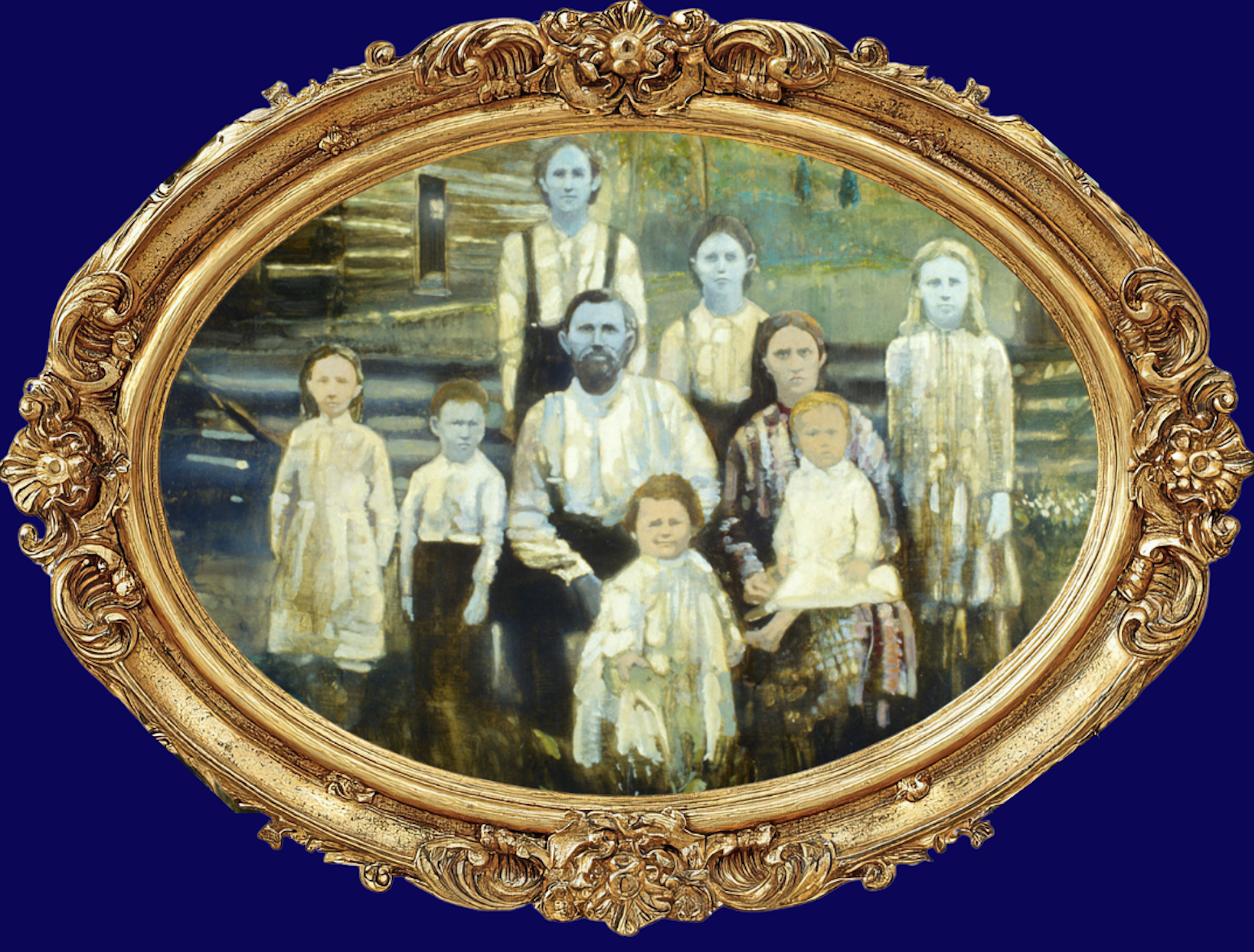

From around 1820 through the mid 1900s there were some very unusual-looking people living in an isolated area of Eastern Kentucky. What made them unusual was the color of their skin – it was blue. They were varying shades of blue: Some were pale blue, others a deeper blue, and still others just had blue tinges to their fingernails and lips.
While it wasn’t unusual to see Blues, as they were called, in this isolated Kentucky hollow, not everyone there was blue. Out of a family with eight children, perhaps four or five of them might be born blue, with the others having ‘normal’ Caucasian skin. It wasn’t until the 1960s that these people came to the attention of the medical community, and it was discovered that they carried a rare blood disorder. But what caused this condition and why was it so prevalent in this specific area?
The Blue Fugates
The story of the blue-skinned Kentucky people began in 1820 when Martin Fugate, a French orphan, settled in the wilds of Eastern Kentucky to claim a land grant near Troublesome Creek. Although there is no mention of his skin color in the earliest records, it’s certain that he carried the gene for a condition now known as methemoglobinemia, a rare blood disorder.
Martin settled near Troublesome Creek and married a red-headed, fair-skinned American woman named Elizabeth Smith. Unbeknownst to them, Elizabeth also carried the recessive gene for this rare blue-skin condition. In order for it to be passed to children, both parents must have the gene. Martin and Elizabeth Fugate had seven children, and four of them were blue.
Spread by Intermarriage
At the time, this area of Eastern Kentucky was wild. There were no roads and only a few other families lived near the Fugates. In this isolation, the families didn’t have much choice when it came time for their children to marry. So when one of the Fugate sons married one of the Smith daughters (Elizabeth’s family) it again created the situation where both parents carried the gene and more blue children were born. The gene for methemoglobinemia spread through the local families living in the cabins dotted along the hollows. They later became known as the Blue Fugates.

They were generally healthy people living into their 80s and 90s, so they didn’t often see doctors. And living in an isolated area, their condition went unnoticed by the outside world. But as roads and railroads were built through these wild areas, they became exposed to others. When outsiders would see them for the first time, they would be shocked by their blue color and often frightened. The Blues suffered prejudice and persecution because of their unusual appearance.
Cause Discovered
Then in 1960, Madison Cawein, a haematologist working at the University of Kentucky medical clinic in Lexington heard about the blue people. He was immediately intrigued and decided to find out what caused the condition. He teamed up with nurse Ruth Pendergrass, and they began talking to the Blues, taking blood samples, and asking about their family histories.
After identifying the condition, Cawein treated the patients with methylene blue which added oxygen to the blood and temporarily returned their skin to its natural color. However, the drug had to be taken regularly, or the blue color would return.
As their world opened up and the families began to marry with others outside their immediate area, the instances of the disease lessened, and now it is rarely seen. But it does occasionally pop up. The last known person to be born exhibiting the symptoms of this disease was a little boy born in 1975. His skin was blue at birth but was a normal color within a few weeks.

The Book Woman of Troublesome Creek
I recently read The Book Woman of Troublesome Creek: A Novel by Kim Michele Richardson. It’s a historical fiction novel about a Blue woman who works as a pack-horse librarian in Eastern Kentucky during the Great Depression. It chronicles the loneliness and dangers of being ‘the last’ of the Blue Fugates. I found this book so interesting and well-written that I couldn’t put it down.

Pack Horse Librarians
Between 1935 and 1943 the US government sponsored the Pack Horse Library Project designed to get books into isolated areas of the Appalachian Mountains. The librarians were mostly women who rode horses or mules across the often-treacherous terrain to deliver books to the mountain folk. In The Book Woman of Troublesome Creek, Cussy Mary Carter is a pack horse librarian as well as being a Blue, so the author combines two very interesting historical subjects.

The Giver of Stars
Another great book about the pack-horse librarians is The Giver of Stars by Jojo Moyes. It shows more of the spirit of these ‘book women’ and how dedicated they were to their mission of distributing books.
What do you think? Let me know in the comments section below. And if you want to read more of my curious histories, subscribe to my blog (at the top or bottom of this page).
Follow Me on Social Media:
You Might Also Like:


- Did Michelangelo Carve This Face in Florence? The Palazzo Vecchio Mystery – 17 March 2026
- 5 Curious Easter Traditions: Rabbits, Bells, Exploding Carts, and More – 16 March 2026
- Ten Wow-Worthy Women Who Changed History – 5 March 2026





COMMENT HERE: Can't wait to hear what you think… (email not required)