


In 1775, just before America declared its independence, Jane Austen was born. She lived in, and wrote about, a world that was quite different from our own. But her insight into humanity allowed her to create characters that we might still recognize today – minus the top hat or bonnet.
But could reading about these Regency characters benefit us “modern folk?” Maybe…
At Risk of Becoming a Janeite
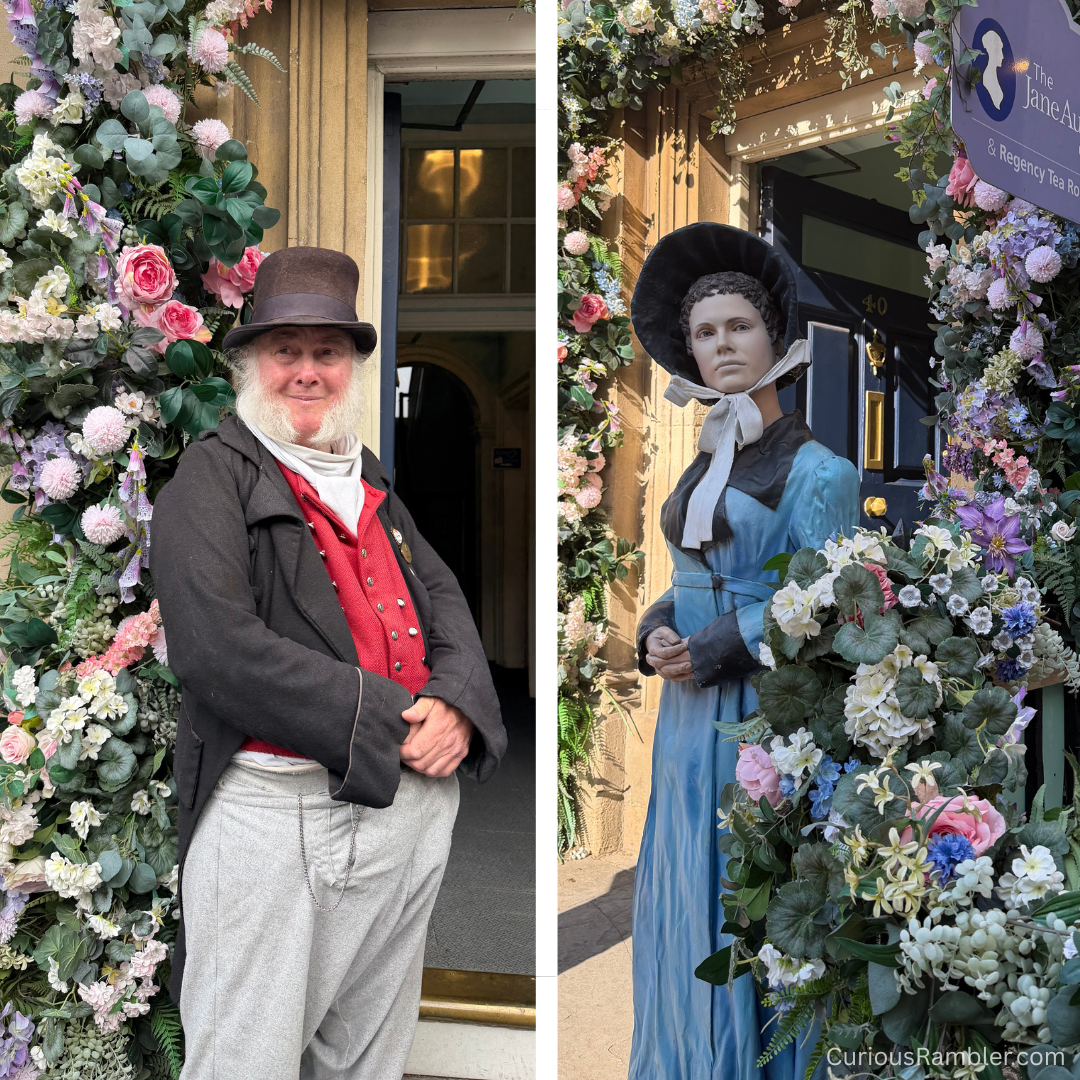
Jane died in 1817 at age 41 and is buried in Winchester Cathedral. During her lifetime she lived in several towns in southern England – including Bath where I live now. The city is proud of its Jane Austen connection and is like a little time capsule of the world she once walked in.
So, being a bit obsessive – as all good researchers are – I’ve decided to read all six of Jane’s finished novels. I have to admit that until now, I’ve only been acquainted with her works through film or tv adaptations (and there is no lack of those). But that’s about to change.
And maybe, I’ll do a little experiment at the same time…

Can Jane Soothe a Troubled Soul?
In reading about Jane Austen, I ran across something that piqued my interest. It seems that her novels were prescribed to soldiers returning from the First World War who were suffering psychologically from the trauma of combat (what we might now associate with PTSD or Post Traumatic Stress Disorder). Apparently, Jane’s stories had a calming effect on them.
In fact, an Oxford tutor, H. F. B. Brett-Smith, worked with hospitals during the war years to help soldiers recover by having them read certain books. He set up a system to correlate literature with the conditions that it could benefit.
Different novels or poems were suggested for different disorders. And, surprisingly, “for the severely shell shocked” the prescription was Jane Austen.

Janeites and Soldiers
Jane Austen always had fans, but the term Janeite was coined in 1894 to describe the ever-growing circle of readers who couldn’t get enough of her works.
And in the early 1900s, many Janeites were men: professors, publishers, or literary men who recognized her talent. When World War I came around, Jane turned out to be a favorite among the soldiers as well. The British government shipped loads of books to the troops to help them cope with the horrors of war, and Jane’s were among the most popular.
Her writings also helped comfort those at home. Rudyard Kipling was an Austen fan and is said to have read her novels to his family during the war. Her books helped them cope as they awaited news and hoped for the survival of their son who was “missing in action,” but never returned from the war.

Jane in the Trenches
In 1924, Rudyard Kipling published a short, fictional story entitled, The Janeites. It tells of a group of soldiers who were drawn together and supported by their love of Jane’s books.
The story begins in 1920 in a Masonic Lodge. It’s cleaning day and the men are reminiscing about the war as they tidy up the lodge. One of the men, Humberstall, has been left mentally damaged by his war experience, and he’s telling the others of his initiation into what he remembers as a secret society called the Janeites.
It was all to do with some girl called Jane. He and the other soldiers read all of her books and took a test to be admitted to the group. It bound them together in camaraderie and gave them something to talk about other than the war.
When Humberstall’s regiment was attacked, he was severely wounded and was the only survivor. In his simple way, he sums up what the books did for him when he says, “You take it from me, Brethren, there’s no one to touch Jane when you’re in a tight place.”

Books and Wellbeing
All this talk about Jane Austen’s novels, and books in general, being able to give solace in traumatic times makes me think: Are some authors more comforting than others in troubling times? Will Jane still do the trick for us today? As I said, I plan to read all her novels, so I guess I’ll find out.
I did notice that after watching the film, Sense and Sensibility, I had a definite feeling of well-being. Was it just a coincidence, or was there really some Jane Austen magic going on there?

Update: Did My Experiment Work?
When I first wrote this article, I was about to begin reading all six of Jane’s completed novels and to see if I noticed any benefits. I’ve now read them — and the experiment appears to have worked. I’ve become a full-fledged Janeite, and now I often return to her books when I’m feeling agitated, overwhelmed, or just a bit off.
Is it the orderly prose, the familiar characters, the humor, or the reassurance that everything will be okay in the end? I’m not entirely sure. But more than a century after Jane Austen was being recommended to shell-shocked soldiers, she still seems to have a remarkable ability to steady a troubled soul.
What do you think? Are there any books, authors, or genres that lift your spirits or help you through hard times? Are you a Jane Austen fan? Let me know in the comments section below. And if you want to read more of my curious histories, subscribe to my blog (at the top or bottom of this page).


Follow Me on Social Media:

- Curious History Review: October 2026 – 1 October 2026
- How Johanna van Gogh-Bonger Made the World See Vincent Van Gogh – 28 September 2026
- A Tragic Medieval Bedtime Story: The Chatelaine of Vergy – 18 September 2026


COMMENT HERE: Can't wait to hear what you think… (email not required)