
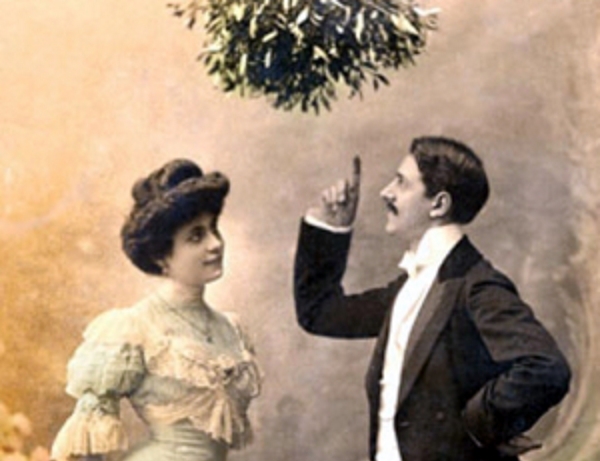

Mistletoe in French is called gui (rhymes with the first part of geese). This ball of vegetation that grows high in the trees has been considered magical since ancient days – because a mysterious plant that grows without soil must be magic.
A Very Beneficial Plant
The ancient druids revered this plant and believed it had many powers. Here are just some of the things mistletoe might be able to do: Cure illness, assure fertility in animals and humans, protect from witchcraft, chase away evil spirits, purify the soul, neutralize poisons, and allow one to see and speak with ghosts.
With all these benefits (apart from seeing ghosts) it’s no wonder mistletoe gained its reputation as a good luck charm. And not only does it keep people safe, it protects their homes as well.
Protects Homes
According to an old tradition, mistletoe would be hung in the home 3-4 weeks before Christmas, but only after removing the old one from the previous year. You had to be careful to not let it touch the ground, then you burned it in the fireplace to protect the house from fire as well as from being struck by lightning. Mistletoe could also be hung on the back of the basement and attic doors to chase away any evil spirits that might be lurking there.

Reconciles Differences
In olden days, if enemies chanced to meet in the woods under a mystical ball of mistletoe, they were to call a truce and lay down their weapons. Today, in the same spirit, we hang mistletoe in our homes at holiday time, and we must kiss those that we meet under it – even if we don’t like them. We have to pretend, just like the enemies in the woods.
When to Use It: Christmas or New Year?
In the US, kissing under the mistletoe is associated with the Christmas holiday season, but in France it was traditionally a New Years Eve custom. Kissing under the mistletoe as the clock chimed in the new year was supposed to bring good luck and, if you were in love with the person you were kissing, it would result in a wedding before year end. But today in France, the kissing season has been extended, just as it has in the US.

Where to Find It
This magical plant grows abundantly in northern France where it is harvested and exported to those of us who don’t want to go into the woods looking for it. Today, in France, you can usually find it in markets during the holidays, but in days gone by, the gui sellers would arrive in December, and walk the streets loaded down with bundles of gui for those hoping for a bit of good luck or just a few kisses.

Another Gui – the Flying Donkey
The French word, gui, doesn’t only apply to this amazing magical plant, it was also the name of St. Nick’s donkey (before he lost his job to the reindeer). In the early history of Santa Claus (or Père Noël in French), old Saint Nick would descend from the sky riding his flying donkey called Gui. They would land on the rooftops, then slide down the chimneys to leave gifts. Children would line up their shoes by the fireplace and fill them with carrots or apples for Gui. The donkey would have his snack, then Santa would refill the shoes with small gifts and sweets. In some parts of northern France this is still the custom on the Festival of Saint Nicholas on the 6 December.
A little holiday joke: If athletes get athlete’s foot, what do astronauts get? ……Missile-toe! Ho Ho Ho! (Sorry, this joke only works with the American pronunciation of missile.)

What do you think? Let me know in the comments section below. And if you want to read more of my curious histories, subscribe to my blog (at the top or bottom of this page).
Follow Me on Social Media:


- Curious History Review: April 2026 – 2 April 2026
- The Secret Victorian Language of Flowers: When Bouquets Carried Hidden Messages – 2 April 2026
- Did Michelangelo Carve This Face in Florence? The Palazzo Vecchio Mystery – 17 March 2026




COMMENT HERE: Can't wait to hear what you think… (email not required)