
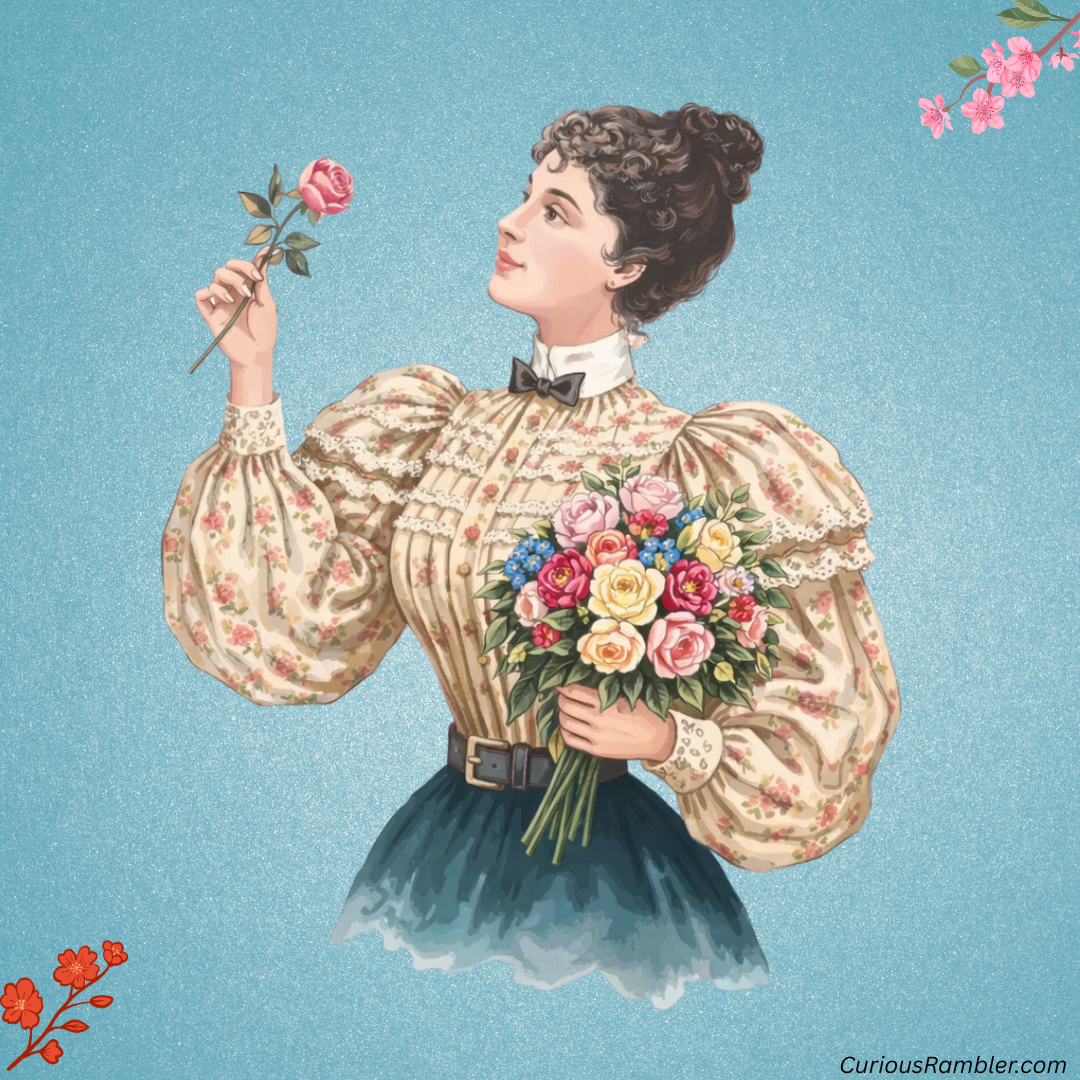
What Is the Victorian Language of Flowers?
The Victorian language of flowers – also known as floriography – was a system that allowed people to communicate emotions through flowers. Each blooming stem had a specific meaning, so a bouquet could express love, jealousy, friendship, or even rejection without a single word being spoken.
When Flowers Spoke Louder Than Words
With the help of popular flower dictionaries, Victorians could both send and decode these floral messages, turning an ordinary bouquet into a secret conversation.
For example, if you were a Victorian young lady and a suitor sent you a bouquet, the first thing you would do is run for your flower dictionary so you could decode its hidden meaning.
Let’s say you received a bouquet with red roses, blue violets, ivy, and myrtle. What could it mean?

Your Language of Flowers book would tell you:

Red Rose = Love

Blue Violet = Faithfulness

Ivy = Fidelity, Marriage

Myrtle = Love
So, this bouquet is not only lovely to behold, but its message brings good news. It means: He loves you (he said it twice), he’ll be faithful – and perhaps there’s even marriage on the horizon.
But what if, instead of red roses, you received yellow roses… with some lavender and little purple Michaelmas daisies with yellow centers? That sounds lovely too – but let’s see what it means…


Yellow Rose = Decrease of Love, Jealousy

Lavender = Distrust

Michaelmas Daisy = Farewell
Yikes! That’s not so good. He doesn’t trust you, he’s jealous, and it looks like he might be leaving you too… Oh well, perhaps in this case, it’s for the best.
Victorians were not supposed to express their deepest emotions openly, but that didn’t mean they were any less feeling. Instead, they developed more coded ways to convey their sentiments, and the language of flowers was the perfect vehicle for these unspoken messages. But, of course, it wouldn’t have worked without the flower dictionaries.
What About Those Flower Dictionaries?

By the mid-19th century, dictionaries decoding the language of flowers had become fashionable gifts and were found on many Victorian bookshelves. These small books listed flowers alphabetically along with their meanings. They also often included posy-related poetry, historic floral facts, and sometimes inspiring illustrations.
One of the most well-known and beautifully illustrated examples is The Language of Flowers, published in 1884 and illustrated by Kate Greenaway.
Pitiless Posies
But not all coded message bouquets were romantic. Some flowers carried surprisingly blunt meanings:

Basil = Hatred

Yellow Carnation = Disdain

Wild Tansy = I declare war against you

Hydrangea = A Boaster, Heartlessness
A bouquet containing these flowers might appear perfectly pleasant, but its hidden message could be cruelly cutting.
It’s Complicated

There was more to these top-secret messages than just the flowers chosen. And small changes could completely alter the message.
Leaning – For example, if a flower in the bouquet leans to the left of the person receiving it, that flower’s meaning refers to them. If reversed, it refers to the sentiment of the giver – basically, the meaning relates to whichever person’s heart the flower leans toward.
Upside down – If a bouquet was presented upside down, all the meanings of the flowers are reversed. For example, a young gentleman might present a bouquet of purple lilacs expressing “I’m starting to have feelings for you.” If the young lady did not return his feelings, she could simply hand the bouquet back upside down – to express that she is feeling quite the opposite.
Thorns & Leaves – Even the removal of thorns or leaves could change the meaning of a flower. In some guides, the number and shape of leaves could also be significant. So, yes, it can get complicated.
Where Did This Flower Language Come From?

In 1819 Le Langage des Fleurs was published in France. The author, Charlotte de Latour (a pen name for Louise Cortambert), produced what became the most influential early flower dictionary. Soon similar books were being published in Britain and America.
Many of these early books tried to explain the origins of the language of flowers with long essays about ancient symbolic meanings and even a supposed secret language used in the harems of the Orient.
The idea was partly inspired by accounts of a message system observed in Turkey during the 18th century. European travelers described a custom known as “selam,” in which objects – including flowers – were assigned meanings and used to convey messages.
These accounts fascinated European readers, and the idea eventually evolved into the elaborate floral symbolism that became popular with the Victorians.
An Imperfect Code

Despite its popularity, the language of flowers was never completely standardized. Different flower dictionaries might give different meanings to the same flower.
As a result, decoding a bouquet could occasionally be ambiguous – adding both intrigue and the possibility of misunderstanding. Nevertheless, the tradition captured the Victorian imagination and became a charming part of 19th-century culture.
Today, most of us give flowers simply for their beauty. But Victorians would have seen every bouquet as a carefully composed message waiting to be read.
The Victorian era was the perfect time for this floral language to flourish. They romanticized nature and were fascinated with all things botanical.
At the same time, society expected restraint in public expressions of emotion. So, the language of flowers offered an elegant solution: a beautiful, coded way to communicate the feelings that could not be spoken aloud.
What Message Would You Send?
Would you like to send and receive secret messages in flowers? Along with the tables of flowers above, here are a few more to help you send some coded bouquets of your own.

Garden Daisy = I share your sentiments

Sweet Pea = Departure

Daffodil = Regard

Peony = Shame, Bashfulness
Which flowers would you choose? And who would you send them to? (Real names not necessary.)
If you enjoy strange and lesser-known stories from history, make sure you’re subscribed (at the top or bottom of this page) – and feel free to share this with a friend who might enjoy it too.
Related stories you might enjoy:


Would you like your own floriography book? You can ind modern language of flowers books on Amazon – like this one by Jessica Roux.
Note: As an Amazon Associate, I earn from qualifying purchases made through my site.

- Curious History Review: April 2026 – 2 April 2026
- The Secret Victorian Language of Flowers: When Bouquets Carried Hidden Messages – 2 April 2026
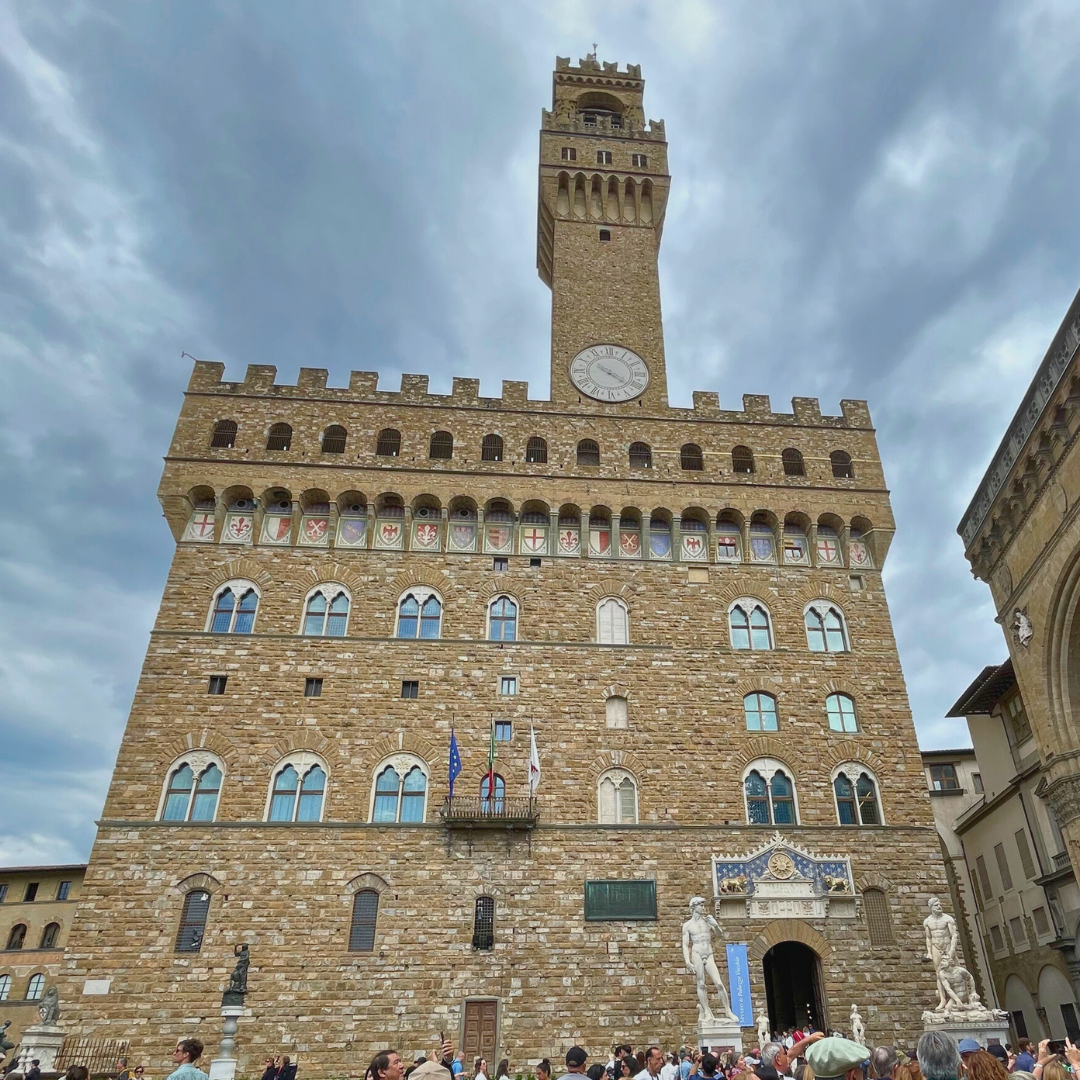
- Did Michelangelo Carve This Face in Florence? The Palazzo Vecchio Mystery – 17 March 2026

COMMENT HERE: Can't wait to hear what you think… (email not required)