

I recently went to Oxford University summer programme and took a course on Lewis Carroll and Alice in Wonderland. Our tutor, the amazing Franziska Kohlt, unwrapped layer upon layer of meaning in the two little children’s books about Alice. Who knew these books contained so much?
And, of course, to fully understand literature, you need to understand the society in which it was written. So, we learned about some of the oddities of the Victorian society that shaped Lewis Carroll. One of those oddities was the way the Victorians were fascinated with madness, mental illness, and dreams and how they dealt with it. Let’s have a look at how madness was treated in society and how it was represented in Alice in Wonderland.

Alice in Wonderland’s Mad Tea Party
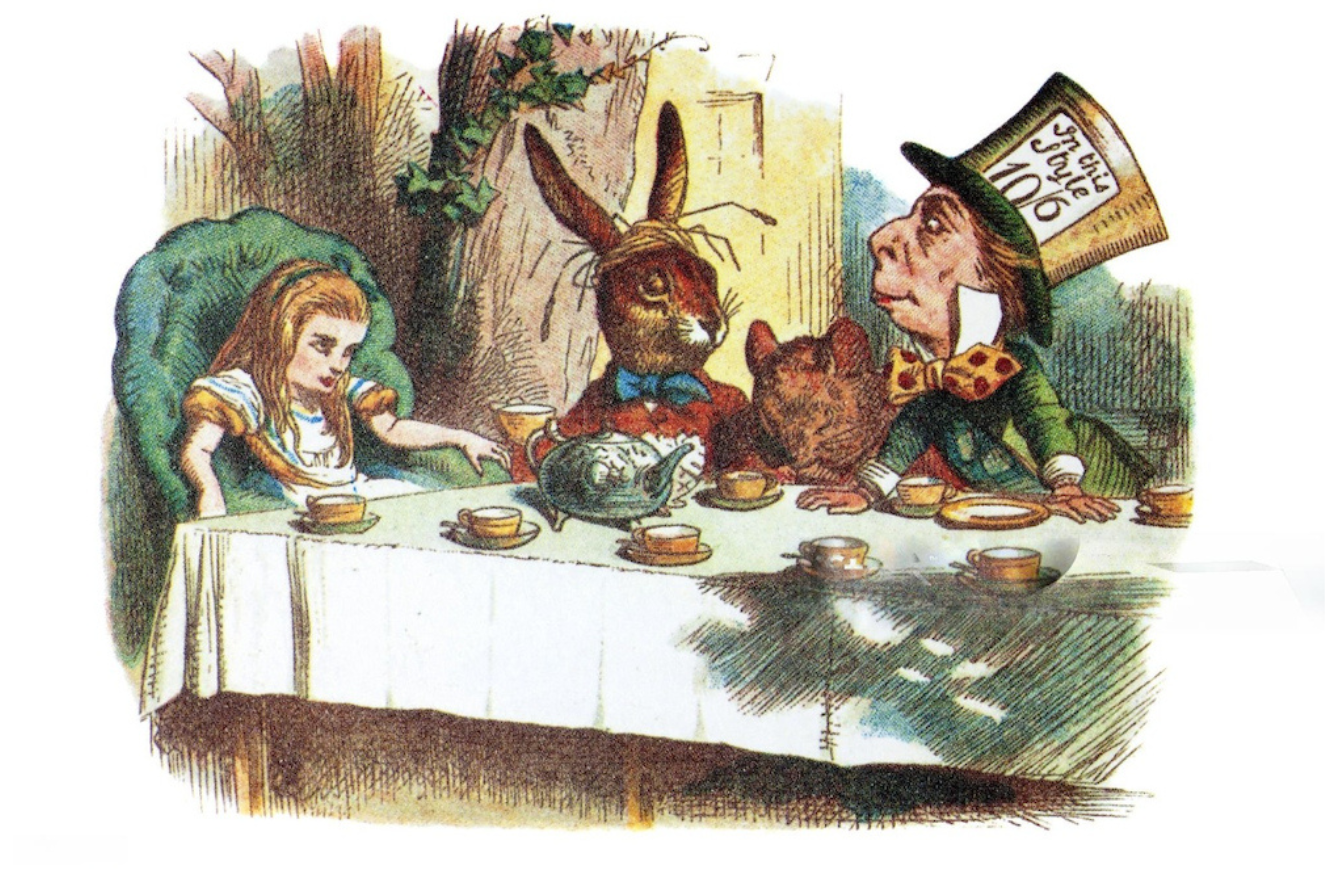
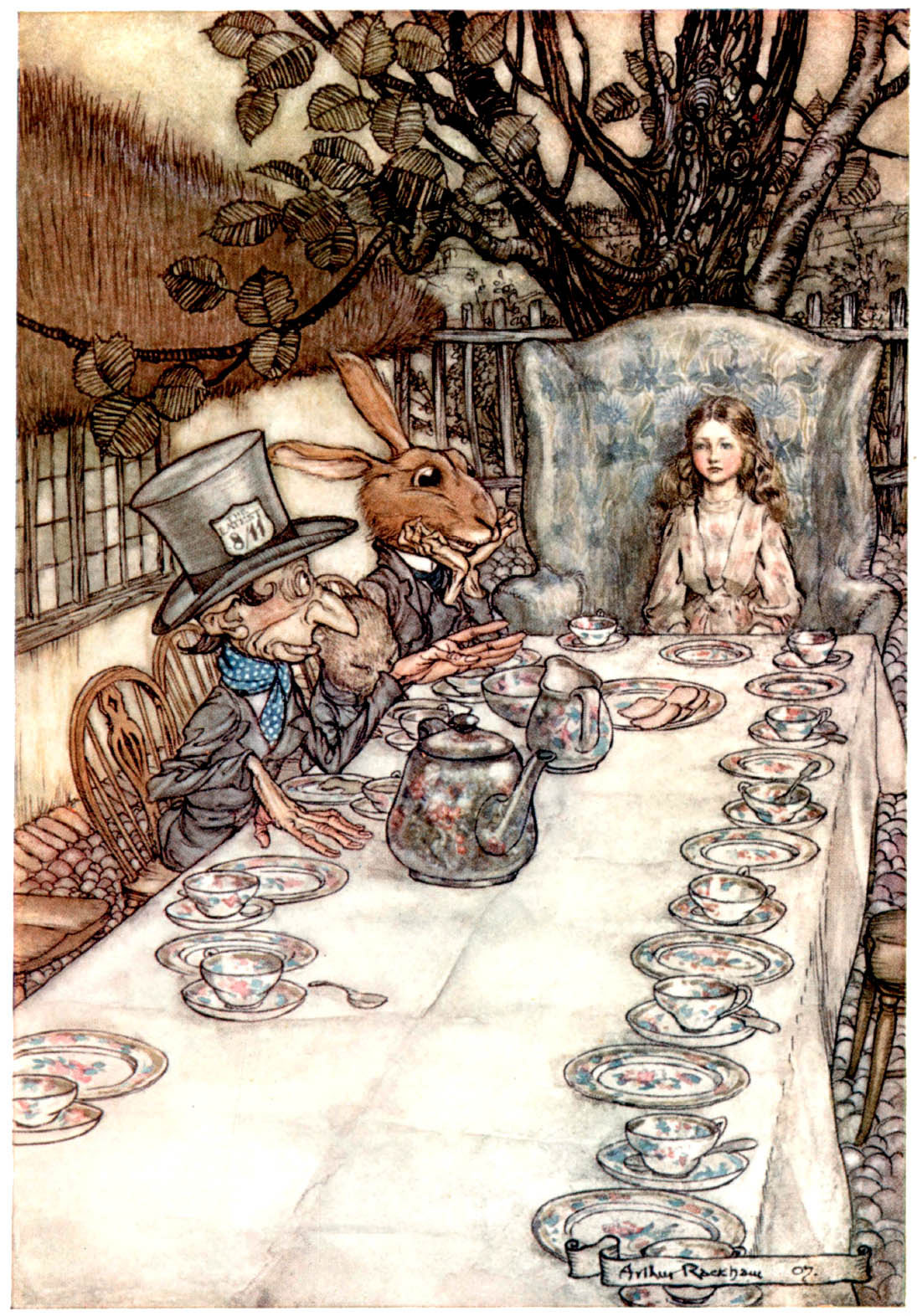
In the book, Alice goes to a mad tea party with the hatter and the march hare: two characters with a reputation for being mad.

“In that direction,” the Cat said, waving its right paw round, “lives a Hatter: and in that direction,” waving the other paw, “lives a March Hare. Visit either you like: they’re both mad.” – Cheshire Cat
Let’s have a look at those attending the tea party…

The Hatter: “Mad as a Hatter” was a saying already in use when Lewis Carroll brought the hatter to the party. It apparently comes from the fact that hat making used to involve using mercury which damaged the nervous system and caused tremors and mental problems in the hat makers.
The hatter in Alice in Wonderland wears a tall top hat advertising his wares. It has a label reading, “In this style 10/6” (10 shillings and 6 pence). Although some illustrators have used different numbers, 10/6 was the original, and in the US, they have made October 6th Mad Hatter Day from the 10/6 on his hat.

The March Hare: The phrase “Mad as a March Hare” also predates Alice and comes from the antics that can be observed in European hares around March, which is their mating season. The hare looks a bit mad as he jumps straight up into the air, boxes with other hares, and just acts strange. The hare in Alice in Wonderland has straw on his head which reminds us of King Lear wearing a crown of weeds when he went mad. It was also a reference to those in early mental asylums who slept on straw and often had remnants of their bedding tangled in their hair.

The Dormouse: Sitting between the mad hatter and the mad march hare is the sleepy little dormouse, which the hare and hatter use as an armrest. Dormice are known for their long hibernation period, so perhaps he represents sleeping and dreaming. The Victorians were keen to understand dreaming and how the mind invents scenes on its own. Some philosophers even compared dreaming to madness because in both states the mind loses its ability to control its ideas and connect them logically.
The last time Alice saw them, they were trying to put the Dormouse into the teapot.

Alice’s entire experience underground was a dream and it seemed as though every character she met was a bit mad.
Real Mad Tea Parties
The Victorians really did attend mad tea parties…
The strange truth is that during the Victorian era there were actual mad tea parties.
In the 19th century, madness was an idea that had captured public attention, and people were fascinated by it. Many large asylums were built to house and treat the mentally ill. And oddly enough, the public would pay an entrance fee to go and observe the patients as a form of curiosity and entertainment. Sometimes the inmates would be encouraged to perform for the visitors. They might play music, dance, or… yes, have tea parties. So, there really were actual “mad” tea parties.

We think of early asylums as being horrible places, and indeed they were. But in the early 1800s, reforms began, and many of them adopted the “moral treatment system.” They strove to treat their patients with kindness and encouraged them to engage in normal activities, such as working, dancing, having tea and making polite conversation.
People would come to visit these institutions to see how the patients acted and how they were treated. This “tourism” would help the hospital with its reputation, and the entry fee would bring in a bit of extra cash. Mental institutions were even featured in tourist guidebooks of the day.

For us today, going to a mental institution for entertainment would be unthinkable. But the Victorian era was a time of scientific curiosity, and people were fascinated with the human mind and body. They didn’t have TV documentaries to watch, so they had to go to the source.
They even attended surgeries as spectators. Many hospitals had operating theaters with tiered seating that could accommodate a large number of people: medical students and doctors, of course, but also interested members of the public. How would you like to have your appendix out in front of an audience?
And another Victorian oddity: They had a fondness for unwrapping Egyptian mummies at parties to reveal the ancient human bodies hidden beneath all those bandages. Read about it here: Victorians Were Mad for Mummies.
Those Victorians sure knew how to have a good time!
What do you think? How do you think Alice in Wonderland reflected the Victorian ideas of madness? Let me know in the comments section below. And if you want to read more of my curious histories, subscribe to my blog (at the top or bottom of this page).
Follow Me on Social Media:


- How Johanna van Gogh-Bonger Made the World See Vincent Van Gogh – 28 September 2026
- A Tragic Medieval Bedtime Story: The Chatelaine of Vergy – 18 September 2026
- Bath’s Jane Austen Festival: Books, Balls, and Bonnets – 5 September 2026


.png)
_(14758718466)_(cropped).jpg)

COMMENT HERE: Can't wait to hear what you think… (email not required)