
Heinzelmännchen
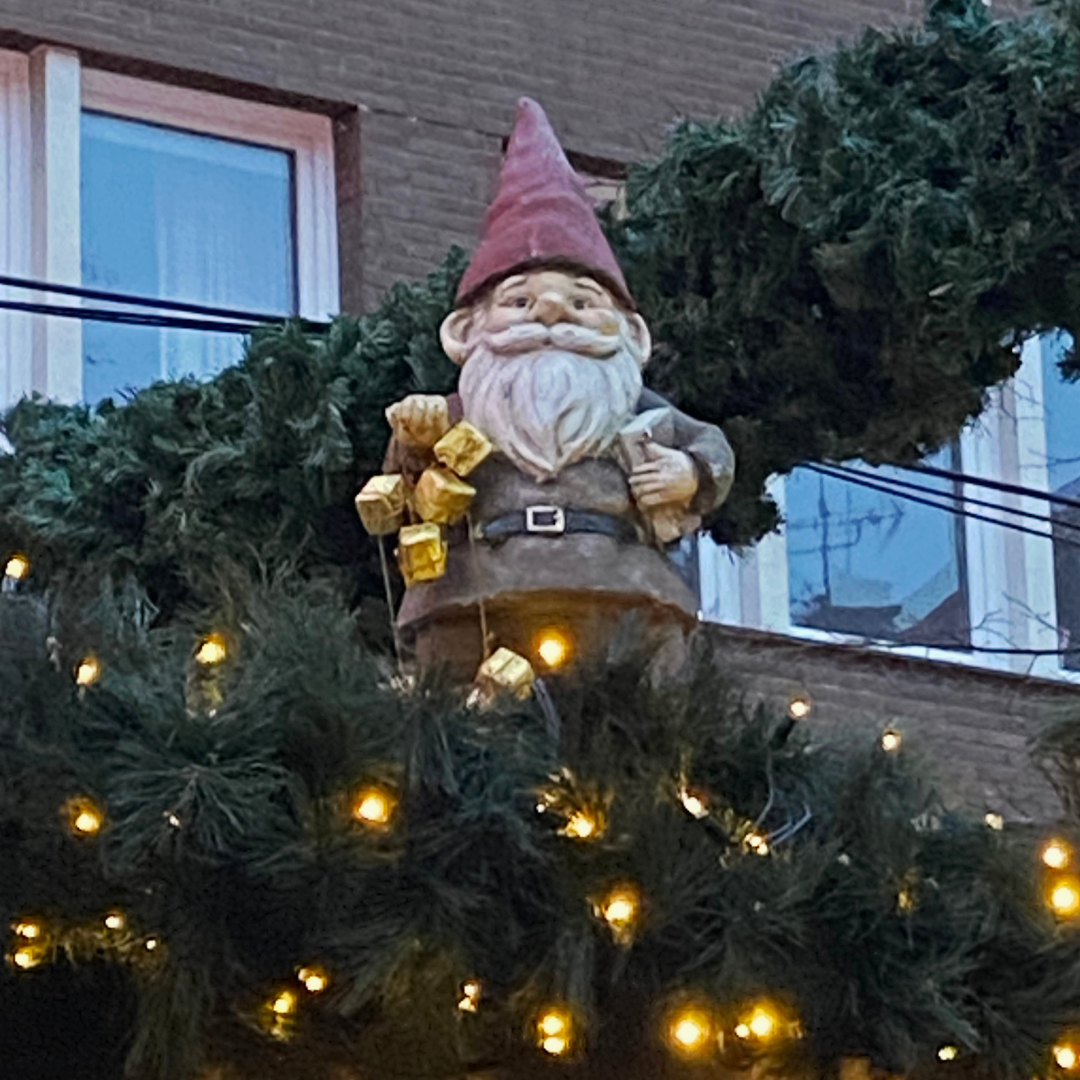
In German they are called Heinzelmännchen, but in English we might call them elves, or more accurately, “house gnomes,” Like other gnomes, they’re short in stature, wear tall, pointy hats (often red), and they’re industrious workers. However, Heinzelmännchen gnomes are specifically associated with the city of Cologne, Germany.
At one time these house gnomes basically kept the city running. During the night, while the people of Cologne were asleep, the industrious, little gnomes would sneak in and do all of their work. They would bake bread, do woodworking, sew clothes, make shoes, etc. So when the people woke up, their chores had all been magically done. They were happy about this, and being a wise bunch, weren’t about to question their good fortune and risk jinxing it.

What did the gnomes get out of it?
Apparently, the gnomes didn’t take any kind of payment for their labors. They just liked working hard and being helpful… and being unseen. Working in secret and finishing before anyone woke up was a challenge and a thrill.
In addition, they enjoyed living in a peaceful, quiet city. The gnomes handled all the work, and the people of Cologne were chilled and happy. The little night-shift workers preferred to stay out of sight, so as long as the humans didn’t interfere or try to spy on them, things remained balanced, and all was well…

Then there was the tailor’s wife…
It seems there is always one troublemaker, one person who has to upset the apple cart – and in this case, it was a tailor’s wife. She just couldn’t let it go. She couldn’t just relax and be thankful that her work was done – she had to know: Who was doing it? What did they look like? So she came up with a plan.
One night she scattered dried peas across the workshop floor. Then she stowed a lantern and matches under her bed, climbed in, pulled up the covers, and pretended to be sleeping. When she heard something in the workshop, she jumped up and lit her lantern.

Aha! She threw open the door and held out the light. She smiled as she saw the little gnomes in their pointy hats tumbling and sliding across the floor on the peas. At last she knew who the little helpers were.
She had just wanted to see them… to talk to them… to thank them even. But the gnomes were not amused. They were embarrassed and annoyed at being treated that way after all the help they had given. They left the tailor’s shop in a huff that night without doing any work at all. And the very next day, all the gnomes packed their little gnome suitcases and left Cologne… for good.
The next morning when the people of Cologne awoke after a nice relaxing sleep, they went into their shops to find that… nothing was done! Everything they had left out to be finished overnight was still there – untouched! And day after day, they awoke to piles of work waiting to be done by them.
That was it – from then on, they had to do their own work. The people who had once been laid back and relaxed became grumpy and tense. And I’m not sure, but I’m guessing that the tailor and his wife had to leave town. And even then, the gnomes didn’t return to Cologne.

Gone but not forgotten
Today, the tired and overworked people of Cologne fondly remember their little house gnomes and their bygone days of leisure. The story of the little gnomes (Heinzelmännchen) was first written down in 1826 by a local teacher. Then in 1836 a poem was written about them.
Around 1899, the city honored the memory of the gnomes by installing a commemorative fountain near the cathedral. It shows the tailor’s wife holding out her lantern while the little gnomes fall below her on the scattered peas. Along the base of the fountain, we can see the gnomes doing all the various jobs of the Cologne tradespeople that they used to do.

Christmas Market
Cologne especially remembers the gnomes at Christmastime – when the little folks return to the city. They always make a showing at the Heinzels Wintermarchen where they sit on rooftops, appear on signs, and help market merchandise within the stalls.
Over time, the Heinzelmännchen have become more than a folk tale – they are part of Cologne’s identity and heritage: They are celebrated in the fountain, the Christmas market, in stories, songs, and children’s literature. And they are a reminder to all of us that perhaps not every mystery needs solving.
Message from Margo
I ran across these little gnomes in the Cologne Christmas market just before Christmas and really liked their story. So, even though Christmas is past, I thought I would share this little lighthearted story.
Would you like to have little house gnomes to do your work? Would you need to see them? Let me know in the comments section below. And if you want to read more of my curious histories, subscribe to my blog (at the top or bottom of this page).
Follow Me on Social Media:


- Bath’s Jane Austen Festival: Books, Balls, and Bonnets – 5 September 2026
- Curious History Review: September 2026 – 3 September 2026
- Jane Austen Walking Tour of Bath – 27 August 2026




COMMENT HERE: Can't wait to hear what you think… (email not required)