
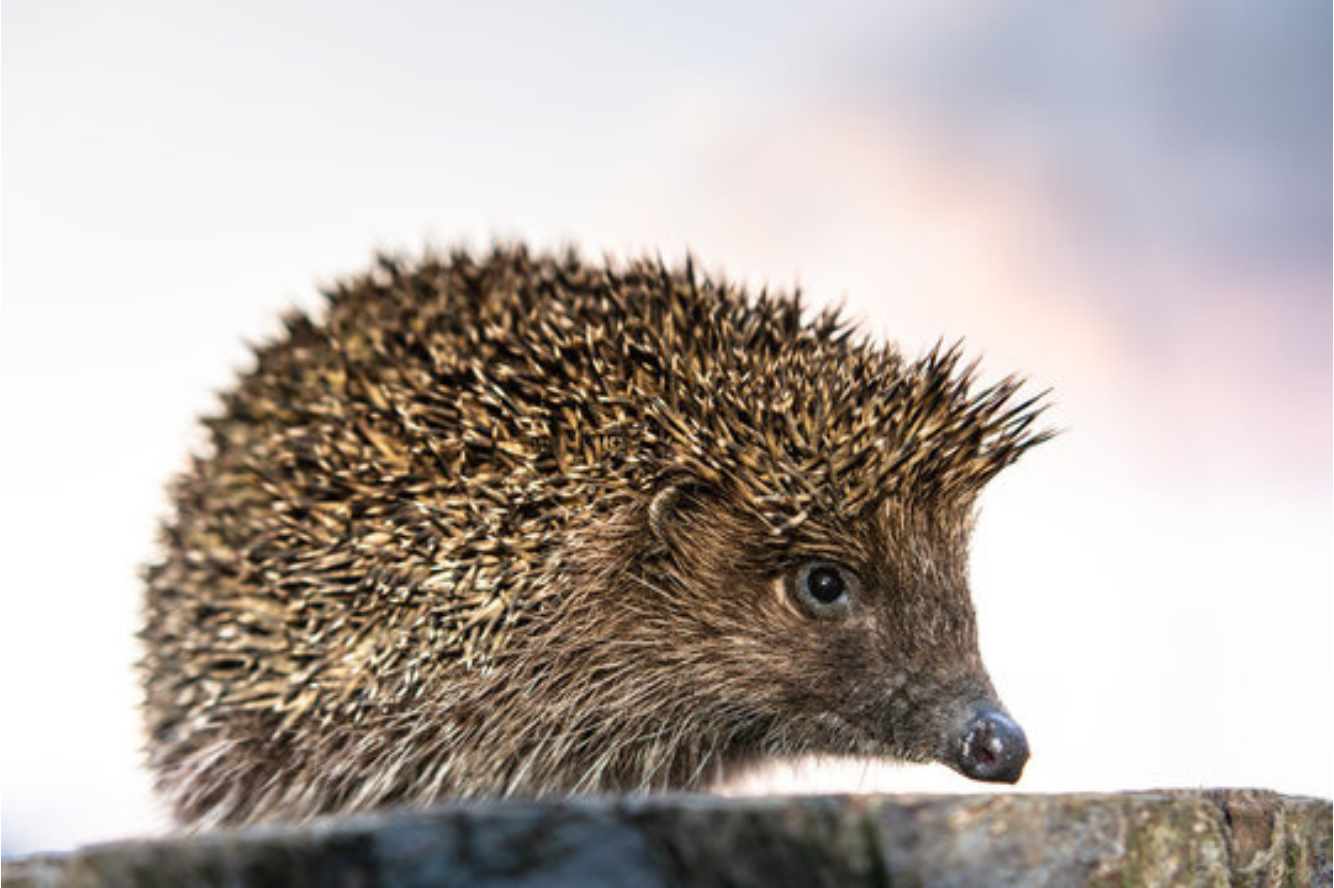
The second of February in the UK is Hedgehog Day. The date corresponds to groundhog day in the US, the day when Punxsutawney Phil comes out of his burrow and predicts the weather for the next six weeks. We do have groundhogs in the UK, but we also have cute little hedgehogs, and we like them so much better.
In fact, hedgehogs are one of UK’s favorite animals. So to celebrate hedgehog day, let’s look at a few facts and some interesting history and folklore related to these little guys.

Why We Call Them Hedgehogs
But first some general knowledge: The word hedgehog comes from hedge (or hedgerow) where they hang out, and hog because their little snouts resembles a piglet. An adult hedgehog has up to 7,000 spines, and they are well known for rolling up into a prickly ball when they feel threatened.
Our ancestors had some interesting ideas about hedgehogs and their behavior – most of them wrong – but still quite interesting…
Hedgehogs can Predict the Weather
Like their American groundhog cousins, hedgehogs have also had a reputation for weather forecasting. The Greeks and Romans believed that hedgehogs could tell when the wind was about to change and which direction it would come from.

It was said that the little hoggies designed their burrows with two entrances one facing north and the other south. When they sensed that there was about to be a strong north wind, they would get busy and block up their north entrance so they could stay nice and secure inside without their little spikes blowing around.
Aristotle (360 BCE) said that even when hedgehogs were kept inside, they would huddle along one wall or the other indicating a change in the wind and which way it would blow from. He said that there was even a man in Constantinople who gained quite a reputation for predicting the weather – and he got all his information from watching the hedgehogs. Of course, he didn’t tell his neighbors this. He took all the glory for himself.

Hedgehogs Carry Fruit on their Spines
These cute little critters have pricked the imagination of humans for thousands of years. In addition to the belief that they predict the changing winds, ancient folk also thought they had a special way of stealing their fruit.
The hedgehogs were said to creep into vineyards at night when the grapes were ripe. They would climb up the vines and shake them until the fruit fell down to the ground. Then, rather than eating this bounty on the spot, they would roll themselves into a ball and roll back and forth over the grapes until their sharp quills were laden with grapes –like a bunch of loaded cocktail sticks. Then they would trundle back to their burrows and feed the grapes to their young or store them up to eat later. They were also accused of doing the same with apples and figs.

One medieval writer claimed that the hedgehog was so proud of this clever trick that if just one piece of fruit would fall off during his journey back home, he would stop and shake off all his cargo. Then the prideful hedgepig would reload, until every piece was back on its designated quill.
Uses for Hedgehog Quills
The spiky quills that the hedgehogs use to protect themselves were the very thing that caused them to be hunted by humans. In ancient and medieval times, the dried skins with stiff quills were stretched over a piece of wood and used for carding wool and other textiles.

Pliny the Elder confirms that, in the 1st century, hedgehog skin was being used in dressing cloth for garments. He went on to say that in the business of hedgehog hide there was a lot of fraud and that the Roman Senate had to make more laws about it than anything else. That seems like it might be a slight exaggeration, but it shows that it was an important part of Roman society.
Pliny goes on to tell us about the hunt: When the hedgehog realizes someone is there to do him harm, he takes his defensive position and rolls into a spiky ball. But humans are not easily deterred, and when the hedgehog knows he cannot escape, he wees on himself. Not because he is frightened – well, he probably is frightened, but it’s because he knows (Pliny assures us that the hedgehog knows) that humans only want his quills. So he squirts his corrosive pee all over himself. His skin is damaged, and it makes his quills rot and fall out, so his hide is of no use to the humans. It’s not much use to him after that either.
So the clever human hunters found a way around that problem. They simply tried to catch the hedgehog just after he had taken a wee.

Hedgehogs and Witches in Shakespeare’s Time
During the 16th century in Britain, the hedgehog had a bad reputation: The poor little creatures were accused of being witches. People believed that witches had familiars, which were small animals that accompanied the witch and did her bidding. Sometime the witch herself – because everyone knows witches were women – could shapeshift into the creature. So if you saw a hedgehog, there was no way to tell whether it was a real hedgehog or a witch.
When a farmer’s cow would stop giving milk, he knew it was because a hedgehog – or a witch disguised as a hedgehog – had sucked it dry during the night. No eggs from a hen? The hedgehog / witch must have stolen them.

So, in 1566, the English Parliament placed a three pence bounty on the head of each hedgehog that was killed. Even the church promised payment for the slaughter of hedgehogs (or witches in disguise).
In Shakespeare’s plays you can see the negative image of hedgehogs: In King Richard III, he uses “hedgehog” as an insult when Anne calls Richard one. In A Midsummer Night’s Dream, Shakespeare lists the hedgehog in a long list of unpleasant creatures: “You spotted snakes with double tongue, thorny hedgehogs, not be seen; newts and blindworms, do no wrong; Come not near our Fairy Queen.” And, in Macbeth, one of the witches includes the hedgehog in her incantation: “Thrice and once the hedge-pig whined…”

Hedgehogs Change Their Image
Up until the twentieth century, whenever hedgehogs showed up in literature, they were portrayed either negatively or in a neutral way. However, in 1905 that all changed. The hedgehog’s image was transformed by Beatrix Potter when she drew and wrote about loveable Mrs. Tiggy-Winkle. She is a hedgehog washerwoman who launders clothing for the animals and birds in her neighbourhood – because in Beatrix’s books, the animals wear clothes.
Mrs. Tiggy-Winkle changed the way we felt about hedgehogs. Everyone fell in love with her, and by association, with all hedgehogs. So much so, that now we have hedgehogs showing up all over the place: in children’s books, games, movies, and we’ve even given the little hedgehogs their very own day.
Happy Hedgehog Day!

Fun Facts:
- The collective noun for a group of hedgehogs is an “array”.
- Hedgehogs are actually lactose intolerant, so don’t put out saucers of milk for them.
- When Beatrix Potter was young, she had a pet hedgehog called Mrs. Tiggy-Winkle.
- If you want to do your bit to help UK hedgehogs, check out the British Hedgehog Preservation Society.
What do you think? Do you love the cute little hedgehog? Let me know in the comments section below. And if you want to read more of my curious histories, subscribe to my blog (at the top or bottom of this page).


Follow Me on Social Media:

- Curious History Review: October 2026 – 1 October 2026
- How Johanna van Gogh-Bonger Made the World See Vincent Van Gogh – 28 September 2026
- A Tragic Medieval Bedtime Story: The Chatelaine of Vergy – 18 September 2026



COMMENT HERE: Can't wait to hear what you think… (email not required)