


Did you ever wonder if Michelin tires had anything to do with a Michelin-starred restaurant? From rubber balls to car tires to a restaurant guide, the Michelin company has quite a story to tell.
It was 1900 in Clermont-Ferrand, France. The Michelin Brothers, Édouard and André, were sitting in their shop having a chat about how a little restaurant guide might boost their rubber tire business. It might have gone something like this…
Édouard: “I’m sure that if we could convince people to drive more, we could sell more tires.”
André: “I agree, and this little guide would do just that. We could list all the places in France where they could refill their tank, or have their car serviced. We could add instructions about changing their tires… And maybe we could add some hotels and restaurants to encourage longer trips.”
Édouard: “That’s a great idea. And we could even rate the restaurants to tell people which ones are the best. I’m sure people would drive far to get the best meals. Our tire sales will go through the roof.”

Michelin Family History
The Michelin brothers were looking for ways to bring in more business. They were in the rubber business – specifically rubber tires. Their family had been interested in rubber for about 70 years. It was around 1830 when their Great Aunt Elisabeth began making little rubber bouncing balls for the children to play with.
She was Elisabeth Pugh-Barker, and she was the niece of Charles Macintosh, the Scottish scientist. He’s the one who discovered that rubber could be liquified and then he invented the rubberized Mackintosh raincoat. So she knew a thing or two about rubber.
Elisabeth’s husband (Édouard Daubrée) and his cousin (Aristide Barbier) formed a company that produced farm machinery. And the secret to their success was rubber. They used rubber for hoses, valves, gaskets, etc. and business was good – at least for a while.

The Michelin Brothers Come into the Picture
Nothing lasts forever, and by the time the cousins died in 1863 and 1864, the business was in a sorry state. Aristide’s daughter, Adèle inherited the whole thing – debts and all. Her husband had absolutely no interest in farm machinery, so Adèle Michelin called on her adult sons, Édouard and André, for help.
The Michelin brothers knew nothing about rubber or farm machinery (Édouard was an artist, and André was an engineer). However, as they studied rubber, they became convinced that it was a material with a buoyant future. In 1889 they changed the company name to Michelin & Cie (Company) and specialized in producing rubber for industry.

Changing a Bicycle Tire Changes Everything
Their future changed one day in 1889, when a horse-drawn wagon pulled up to the Michelin factory. The wagon carried a bicycle with a flat tire that needed repairing. Instead of the usual solid rubber tire, this was a new kind of air-filled rubber tire that was glued on. It took hours to remove, repair and reglue it.
After the tire was finished, the curious brothers took the bike for a little spin. They were amazed by how much more comfortable these unusual tires were. Bicycle riding was a growing trend, and they began thinking about a way to make better tires that were more comfortable and easier to replace.
It took a few years, but the brothers finally came up with a detachable, air-filled tire that could be replaced in only 15 minutes. It was a game changer, and the modern tire was born. In 1891 this new Michelin-designed tire was used on the bicycle that won first place in the first Paris-Brest-Paris race. The rider finished eight hours ahead of the second-place rider.

Thoughts Turn to Cars
After that great success, and with many bicycle tires sold, the brothers turned their thoughts toward automobiles. There were only about 3,000 or so in the entire country at that time, but they believed cars were the future of travel. And, of course, those cars would need tires – which they would make. So they adapted their easy-to-change bicycle tire to fit cars. Their timing was perfect.

The Michelin Man is Born
The new Michelin tires needed a good, recognizable brand image, and Édouard came up with it in 1894. They were at their stand at the Universal Exhibition in Lyon when Édouard glanced over at a stack of tires. “Look at that,” he said, “It could be a man’s body if it just had arms and legs.” From this, the idea of the Michelin Man was born.
In the first version he was a large tire man making a toast between two battered tire competitors. He was holding a big glass full of road debris that would damage other tires (not Michelin tires, of course). The text says “Nunc est Bibendum!!.. c’est-a-dire “A Votre Sante, Le pneu Michelin boit l’obstacle!.”
Translation: Now it’s time to drink!!.. That is to say, ‘To Your Health! The Michelin tire drinks obstacles!’”
Today no one would think of mentioning drinking and driving, but hey, they were French and there probably weren’t many serious accidents with cars traveling at less than 20 miles per hour. Because of this slogan, the Michelin Man is known as Bibendum in France (or Bib for short).
The Michelin Man image was an immediate success and is one of the longest lasting trademarks still in existence.

The Michelin Guide
From the Michelin Man to the Michelin Guide… Now, we can get to the Michelin Brothers sitting in their shop talking about printing a little guidebook tempting people to travel, which in turn would boost their tire sales.
Their first guide, full of practical information, was printed in 1900. Then in the 1920s they added hotels and restaurants. That section became so popular that they decided to print it as a separate guide. Then they hired anonymous inspectors to go out and eat at these restaurants to review and rate them.

The Stars
In 1926 they began to award stars for the best restaurants. Originally the restaurants were only awarded one star. Then a few years later, they came out with a three-star system.
- 1 star – A very good restaurant in its category – worth a stop.
- 2 stars – Excellent cooking – worth a detour.
- 3 stars – Exceptional cuisine – worth a special journey.
The MICHELIN Guide soon became the go-to guide for food lovers. It encouraged them to drive to the best restaurants and have a great meal – and the more tires worn out driving to Michelin-star restaurants, the more sales for the Michelin brothers.
The guide started in France and has since spread to include more than 40 countries. It’s a prestigious guide, and countries now pay the Michelin company to produce a guide for their country. For years the guide was in print, but today it can be accessed online. You can see the Michelin Guide website here.

In addition to the star ratings, the Michelin guide now also lists:
- Bib Gourmand – Value for money, high-quality food at a good value.
- Green Star – A strong commitment to sustainability.
- Selected Restaurants – No star or rating, but still quality food.
Note: The “Bib” in “Bib Gourmand” refers to the Michelin Man’s nickname, and not the item worn around the neck to keep you from dripping food on your clothing.

What About Those Inspectors?
Michelin prides itself on its anonymous inspectors, and they are what makes the whole thing work. They are almost like secret agents, keeping a low profile about their line of work, and sometimes not even letting their family and friends know what they do, so their cover won’t be blown.
It sounds glamorous, but the life of a Michelin inspector can be difficult:
They must be anonymous so they can have the same experience as any other diner. That means they can’t brag about their job or even enter into a conversation where people are talking about their work.
They are paid by Michelin, so they don’t get any special treatment or benefits from the places they review.
They must travel and eat a lot. While that sounds like it could be a great lifestyle, Michelin inspectors might have to travel up to three weeks per month and eat multiple meals per day in restaurants. That could get old.
They cannot be picky eaters. They must try a variety of foods on the menu and visit multiple times to check for consistent quality.

What are they looking for?
While keeping a low profile, those Michelin inspectors are making notes and rating restaurants on 5 points:
- Quality ingredients
- Mastery of flavor and cooking techniques
- The personality of the chef reflected in the cuisine
- Value for money
- Consistency (over time and across the menu)
Michelin stars have traditionally been coveted by restaurants as recognition of their excellent food. However, some restaurants have decided to decline their stars, claiming they can bring too much pressure and even limit creativity.
What do you think? Do you seek out Michelin starred restaurants? Which is your favorite? Let me know in the comments section below. And if you want to read more of my curious histories, subscribe to my blog (at the top or bottom of this page).
Follow Me on Social Media:


- Curious History Review: November 2026 – 5 November 2026
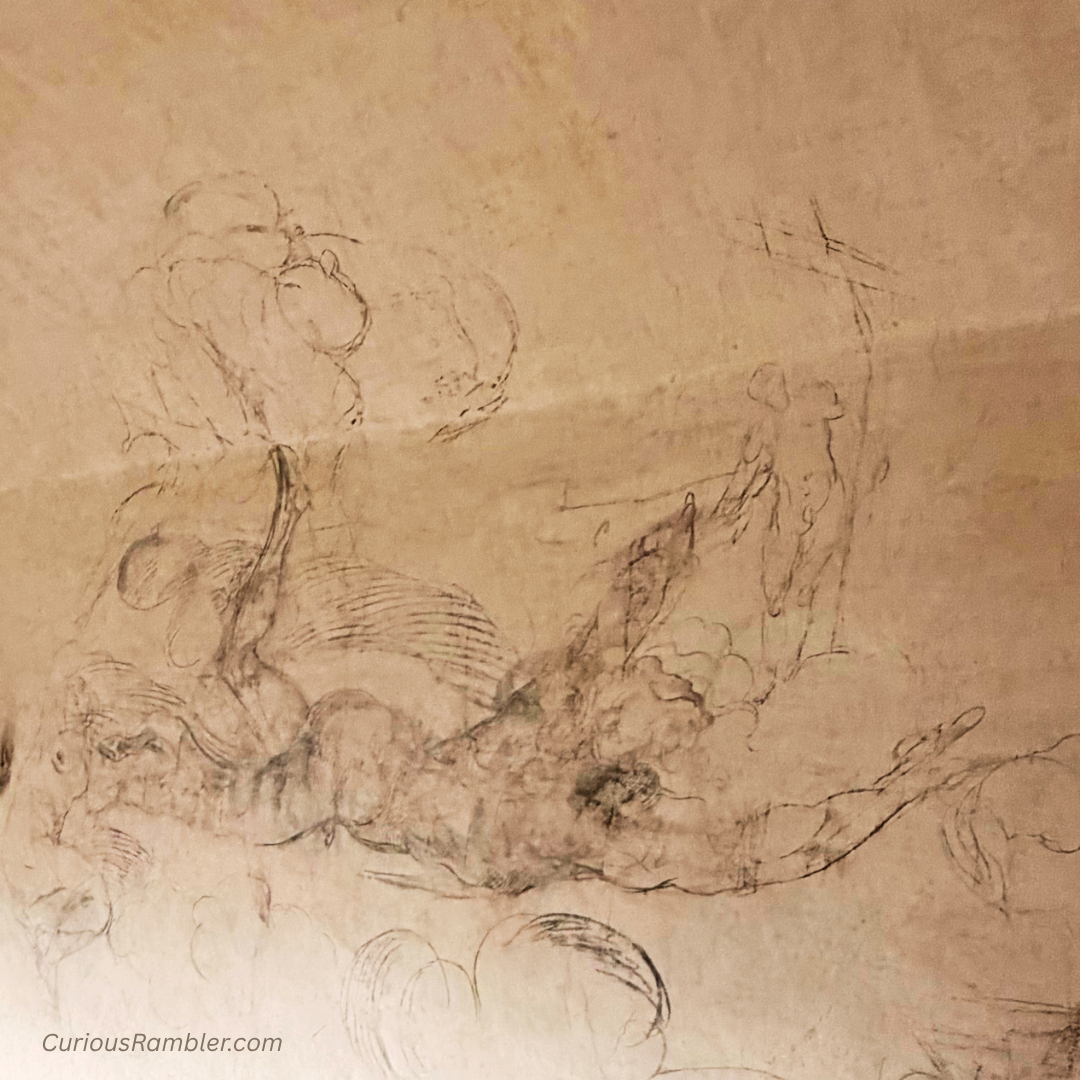
- Michelangelo’s Secret Room in Florence: A Hiding Place Beneath the Tombs – 5 November 2026
- Why Michelangelo Hung Mattresses from a Bell Tower – 26 October 2026




COMMENT HERE: Can’t wait to hear what you think… (email not required)