


The fleur de lys is a stylized flower that has long been associated with the kings of France.
“Fleur de lys” literally means flower of the lily – which might lead you to think that the symbol is a stylized lily. The only problem is that it doesn’t look like a lily flower… And that’s because it’s not. It’s really an iris: specifically a yellow iris that grows at the water’s edge.
It’s an Iris
So why call an iris a lily? The confusion seems to be linguistic. There are two spellings for this emblem – fleur de lis and fleur de lys. Both can be used to refer to the botanical lily flower or the symbol.
There also happens to be a river that runs from Pas de Calais in northern France to Ghent, Belgium which is called the Leie or Lys. And this river has lots of yellow iris growing along its banks.
Since the early Frankish kings were from that area, it seems likely that the fleur de lys represents the flower that grows on the Lys River (the yellow iris). The fleurs de lys on the old French flags are gold (like the yellow iris) and the background is blue (like the Lys River).

The first historical evidence we have of the fleur de lys on the shield or coat of arms of the French Kings dates to the twelfth century and Louis VI. His blue shield was strewn with golden fleurs de lys. This scattering of the symbols was used until the late fourteenth century when Charles V changed it to a group of three.
But twelfth-century documents claim that the link between the fleur de lys and the French kings dates back to the fifth-century and King Clovis.
Clovis and His Iris
One story links the fleur de lys with King Clovis’ conversion to Christianity. Clovis was facing a battle with a much stronger army. But he wasn’t worried because he had faith in his ancestral shield.
Then just before the battle began, the symbols on his shield changed to golden fleurs de lys on a blue background. Clovis threw it down and quickly grabbed a new shield. The same thing happened three times, and Clovis was running out of time. He had to go into battle with the fleurs de lys. He fought fiercely and was victorious.
Confused but happy, the King told his wife the tale about the golden flowers appearing on his shield. The Queen assured him that God had helped him win the battle.
She said the three flowers represented the holy trinity and would bring him a long life. The gold color meant he would reign over a golden age, and the blue background represented the heaven that he was promised if he believed in the true God. That was enough to convince Clovis, and he became a Christian like his wife. He kept the fleur de lys as his symbol.

A Second Legend
Another legends tells us that Clovis and his army were in battle and were pushed back into the marsh lands. They were trapped and would surely have been slaughtered had they not spotted a group of yellow water iris.
Knowing that these flowers grew in shallow water, they saw just where they could cross the waters to safety. According to this legend, this is the reason Clovis adopted the yellow flower as his symbol.
In some of these stories, an angel comes down from heaven with a holy flask shaped like a fleur de lys and pours out holy oil to anoint Clovis.
These legends that surfaced around the twelfth century might have been invented to show that Louis VI’s symbol indicated his divine right to rule and to link him to the early Frankish kings. Of course, that doesn’t mean that King Clovis didn’t really use the fleur de lys on his shield. We just haven’t come across any actual proof of it as yet.
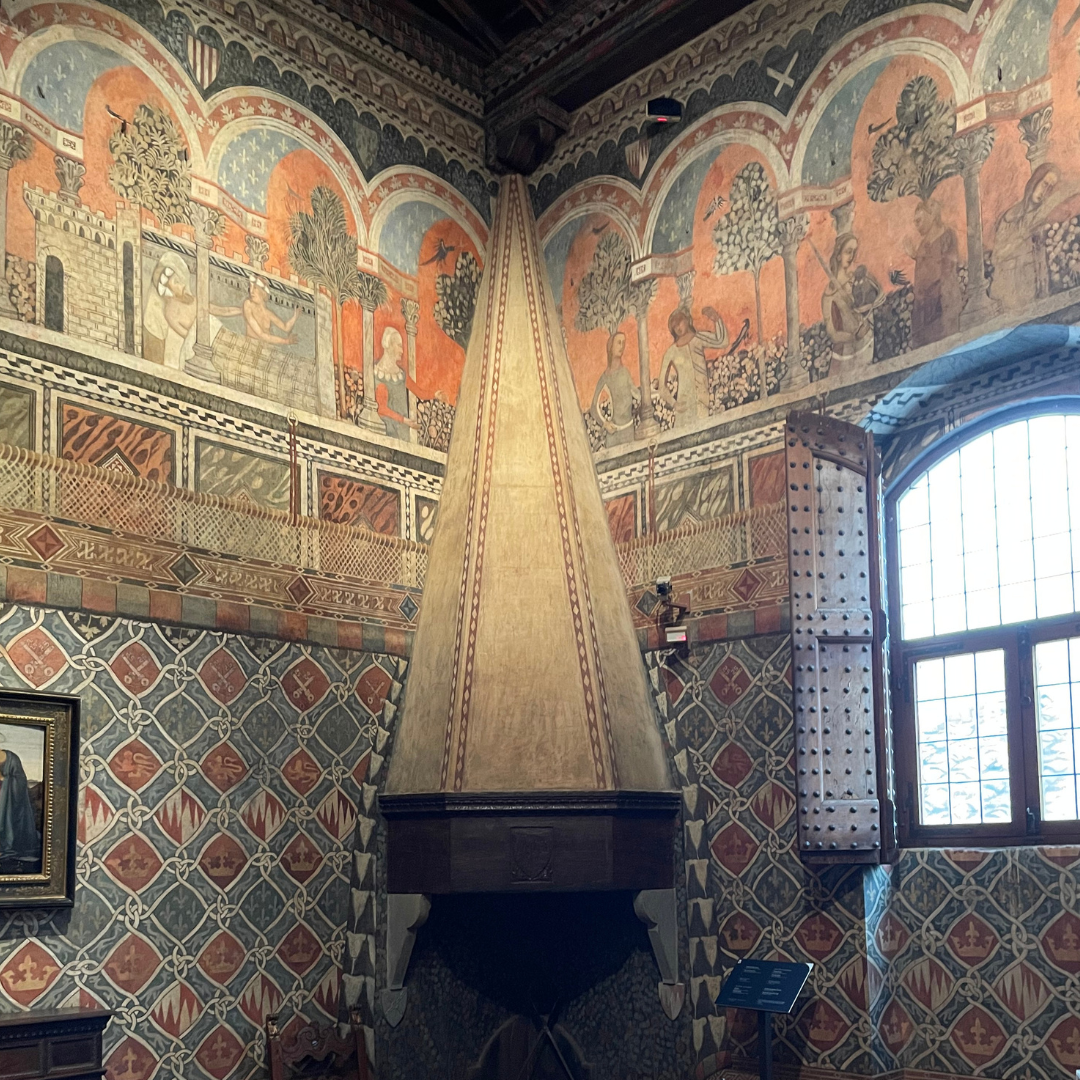
The fleur de lys has a strong connection with French royalty, but it has also been used by other countries, monarchies, cities, and organizations throughout the years. You can read about the Florentine fleur de lys (the giglio) here.
Do you know of other places the fleur de lys is used? I’d love to hear about it in the comments section below. And if you want to read more of my curious histories, subscribe to my blog (at the top or bottom of this page).


* More about France – You can read more stories like this in my book Berets, Baguettes, and Beyond.
Follow Me on Social Media:

- How Johanna van Gogh-Bonger Made the World See Vincent Van Gogh – 28 September 2026
- A Tragic Medieval Bedtime Story: The Chatelaine of Vergy – 18 September 2026
- Bath’s Jane Austen Festival: Books, Balls, and Bonnets – 5 September 2026




COMMENT HERE: Can't wait to hear what you think… (email not required)